
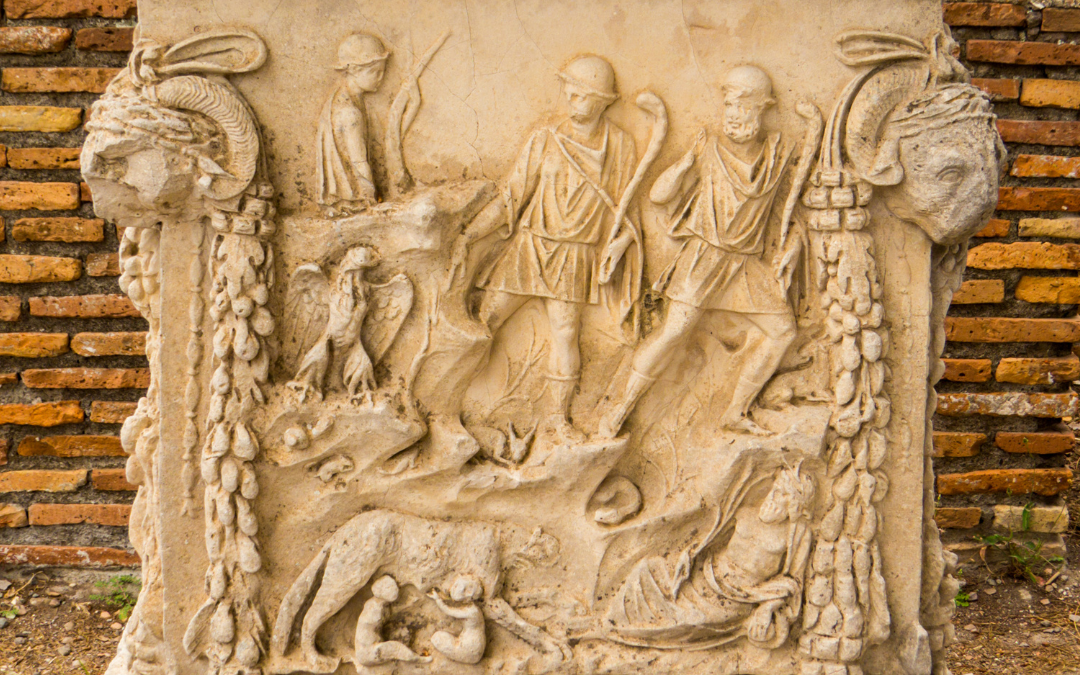
Let me take you on a historical journey through Ostia Antica, an ancient port city located near Rome. Stepping into Ostia Antica is like stepping back in time, as you wander through its remarkably preserved ruins that speak volumes about the daily life and bustling trade that once thrived here. From the well-preserved theater to the sprawling baths and the remnants of grand villas, every stone seems to whisper stories of a bygone era. As you explore the intricacies of this archaeological marvel, you’ll find yourself immersed in the rich history of Ostia Antica, gaining a deeper understanding of the ancient Roman world and its significance in shaping the modern European civilization. So, let’s embark on this captivating journey and discover the secrets that Ostia Antica holds.
The origins of Ostia Antica
Early settlement and Roman colonization
Ostia Antica, located at the mouth of the Tiber River just 20 miles southwest of Rome, has a rich and fascinating history that dates back to ancient times. The area has been inhabited since the 4th century BC, and it was initially a small settlement for salt production and trade. However, it was during the 4th century BC that the Romans established a colony in Ostia Antica, making it an essential port city for the Roman Empire.
Importance as a port city
Ostia Antica’s location at the mouth of the Tiber River made it a crucial port for Rome. The city’s proximity to Rome meant that goods could be easily transported from the port to the capital, making it an economic hub for trade. Additionally, Ostia Antica served as a military base to protect Rome from potential naval attacks. The port was bustling with activity, with ships from all over the Mediterranean bringing in goods and materials for distribution throughout the empire.
Decline and abandonment
Despite its prosperous past, Ostia Antica experienced a decline in the 4th century AD due to a combination of factors. One significant factor was the shifting course of the Tiber River, which limited the port’s ability to accommodate large ships. Additionally, the fall of the Western Roman Empire led to a decline in trade and economic activity. The city was gradually abandoned, and its decline continued through the Middle Ages. Today, Ostia Antica stands as a well-preserved archaeological site, offering visitors a unique glimpse into ancient Roman life.
Exploring the ruins of Ostia Antica
The Ostiense Museum
One of the first stops on your exploration of Ostia Antica should be the Ostiense Museum. Located near the entrance of the archaeological site, this museum houses a vast collection of artifacts and statues that were discovered during excavations. The museum provides visitors with a comprehensive overview of the history, culture, and daily life of Ostia Antica. The exhibits are curated in a way that allows visitors to understand the context in which these artifacts were used, giving them a deeper appreciation for the rich history of the city.
The Forum
Next, make your way to the Forum, the political and social center of Ostia Antica. The Forum was a bustling hub of activity, with temples, government buildings, and markets. It served as a gathering place for the citizens of Ostia Antica, with public meetings, religious ceremonies, and commercial transactions taking place here. The Forum’s ruins give you a sense of the city’s grandeur, and you can still see the remains of the Capitolium, the most important temple in Ostia Antica.
The Baths of Neptune
The Baths of Neptune, located near the Forum, offer a fascinating insight into the Roman bathing culture. These expansive public baths were a place for relaxation, socializing, and maintaining personal hygiene. The complex consisted of various rooms, including hot and cold baths, a swimming pool, and exercise areas. The intricate mosaics and frescoes that adorned the walls of the Baths of Neptune are a testament to the opulence and grandeur of these Roman bathhouses.
The House of Diana
For a glimpse into the daily life of the privileged class in Ostia Antica, visit the House of Diana. This well-preserved ancient Roman residence belonged to a wealthy family and showcases the architectural and decorative elements of the time. The House of Diana features beautifully preserved frescoes, intricate floor mosaics, and luxurious courtyards. Exploring this remarkable residence allows you to imagine what life was like for the elite in Ostia Antica.
The Theater
No visit to Ostia Antica would be complete without a visit to the Theater. This ancient Roman theater was once a bustling center for entertainment, with plays, musical performances, and even gladiatorial combat taking place within its walls. The theater could accommodate up to 3,500 spectators, and its well-preserved structure provides a remarkable insight into the architectural prowess of the Romans. Take a seat in the grandstands and imagine yourself transported back to ancient times, surrounded by the sights and sounds of a vibrant theatrical performance.
Daily life in Ostia Antica
Housing and urban planning
Ostia Antica provides us with valuable insights into the housing and urban planning of ancient Rome. The city was carefully structured, with clearly defined residential areas and public spaces. The houses in Ostia Antica ranged from modest apartment buildings to lavish villas, depending on the wealth and social status of the inhabitants. The layout of the houses typically consisted of a central courtyard surrounded by rooms, with decorative elements such as mosaics and frescoes adorning the walls. Exploring the residential areas of Ostia Antica allows you to understand the everyday lives of the people who called this city home.
Commercial activities and trade
As a bustling port city, trade and commercial activities were at the heart of Ostia Antica’s economy. The city had a thriving market, known as the macellum, where merchants from all over the empire would sell goods and produce. The macellum was equipped with shops, stalls, and storage areas, all designed to facilitate bustling trade. The presence of warehouses and docks in Ostia Antica attests to its importance as a trading hub. Exploring the commercial areas of the city gives us a glimpse into the vibrant economic life of ancient Rome.
Religion and worship
Religion played a significant role in the lives of the ancient Romans, and Ostia Antica was no exception. The city was home to numerous temples and religious structures dedicated to various deities. The most important temple in Ostia Antica was the Capitolium, which was dedicated to the Roman gods Jupiter, Juno, and Minerva. The city also had temples dedicated to other gods and goddesses, such as the Temple of Hercules and the Temple of Rome and Augustus. These religious structures were not only places of worship but also important centers of social and cultural gatherings.
Entertainment and leisure
Ostia Antica was a city that valued entertainment and leisure. In addition to the theater, the city boasted a wide range of recreational activities for its inhabitants. The Terme del Nuotatore, or Baths of the Swimmer, were a complex of public baths that included a swimming pool and exercise areas. The city also had a large arena, known as the Amphitheater, where gladiatorial games and animal fights were held. In addition to these organized activities, the beach of Ostia Antica provided an opportunity for relaxation and leisure, with its sandy shores and crystal-clear waters.
 English