
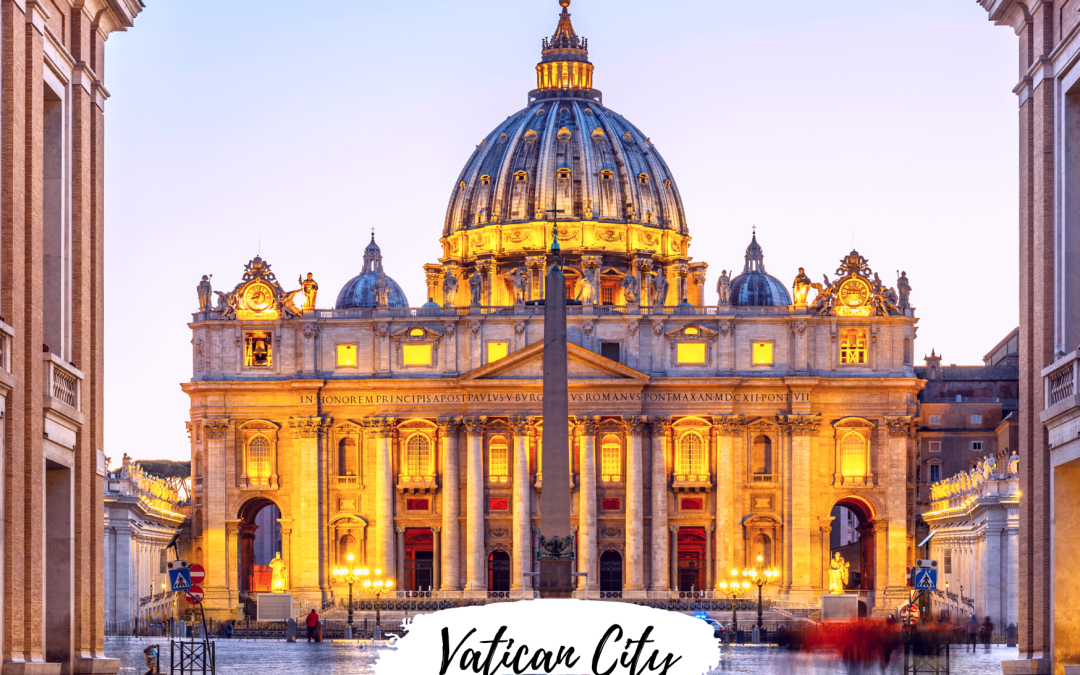
Welcome to the Vatican City, a place where history comes alive with every step you take. Nestled within the heart of Rome, this small city-state holds some of the world’s most renowned historical treasures. From the awe-inspiring Sistine Chapel to the grandeur of St. Peter’s Basilica, every corner of the Vatican whispers tales of a bygone era. But it’s not just the stunning architecture that captivates visitors; it’s the sense of reverence and spirituality that permeates the air. As you wander through the Vatican’s hallowed halls, you can’t help but feel a deep connection to the past, an understanding of the impact this sacred place has had on the world. The Vatican City is a must-visit destination for history enthusiasts, art aficionados, and those seeking a profound cultural experience.
1. The Vatican Museums
Stepping into the Vatican Museums is like entering a gateway to centuries of history and art. With a collection spanning over 70,000 works, it’s no wonder that this world-renowned institution attracts millions of visitors each year. But before we dive into the extraordinary collections and highlights, let’s take a moment to understand the history of the Vatican Museums.
1.1 History of the Vatican Museums
The roots of the Vatican Museums can be traced back to the early 16th century when Pope Julius II decided to display his private collection of ancient statues in what is now known as the “Cortile Ottagono” or Octagonal Courtyard. Over the years, subsequent popes continued to expand the collections, with notable contributions from Pope Sixtus IV, who established the library that eventually became part of the museums. In 1506, the Sistine Chapel joined the papal collections, further cementing the Vatican’s commitment to preserving and showcasing art.
1.2 Collections and Highlights
The Vatican Museums house a vast array of artistic treasures from different periods and cultures. From Egyptian mummies to Etruscan ceramics and Renaissance masterpieces, there is something here to captivate every art enthusiast. Among the must-see highlights is the Gallery of Maps, where a series of stunning maps depict the Italian peninsula and its regions in exquisite detail. The Raphael Rooms, adorned with frescoes by the famous artist, offer a glimpse into the Renaissance splendor of the Vatican. And of course, no visit is complete without exploring the Pinacoteca, which houses an extensive collection of paintings by renowned artists such as Caravaggio, Raphael, and Leonardo da Vinci.
1.3 The Sistine Chapel
Undoubtedly one of the most iconic attractions within the Vatican Museums, the Sistine Chapel is a masterpiece of Renaissance art. The chapel’s ceiling, famously painted by Michelangelo, depicts scenes from the Old Testament, including the breathtaking “Creation of Adam.” The Last Judgment, another awe-inspiring fresco by Michelangelo, covers the entire altar wall of the chapel. The Sistine Chapel is also of great significance as it serves as the location for the papal conclave, where the election of a new pope takes place.
1.4 Raphael Rooms
Adjacent to the Sistine Chapel, the Raphael Rooms offer visitors a stunning display of frescoes painted by Raphael and his workshop. These rooms were once the private apartments of Pope Julius II and later used by subsequent popes. The School of Athens, one of the most famous works by Raphael, can be found in the Stanza della Segnatura. The room also features other frescoes depicting different branches of knowledge, symbolizing the scope of human achievement.
1.5 Pinacoteca
For art lovers, the Pinacoteca is a paradise. This art gallery showcases an extensive collection of paintings dating from the medieval period to the 19th century. Highlights include Caravaggio’s “The Entombment of Christ,” Raphael’s “Transfiguration,” and Leonardo da Vinci’s unfinished masterpiece, the “St. Jerome in the Wilderness.” The Pinacoteca provides a unique opportunity to trace the evolution of artistic styles and techniques across different historical periods.
2. St. Peter’s Basilica
No visit to the Vatican City is complete without exploring the awe-inspiring St. Peter’s Basilica. As the largest church in the world, it is a testament to the grandeur and spiritual significance of the Catholic Church. Let’s delve into the history, architecture, and notable features of this architectural marvel.
2.1 History and Architecture
St. Peter’s Basilica stands on the site believed to be the burial place of Saint Peter, one of the twelve apostles of Jesus Christ and the first Bishop of Rome. The original basilica was built in the 4th century by Emperor Constantine, but it underwent extensive renovations and reconstructions over the centuries. The current basilica, completed in the 17th century, is a stunning example of Renaissance and Baroque architecture, with contributions from legendary architects such as Michelangelo and Gian Lorenzo Bernini.
2.2 The Baldachin by Bernini
One of the standout features of St. Peter’s Basilica is the magnificent baldachin, a bronze canopy standing over the high altar. Designed by Bernini in the 17th century, the baldachin is a towering structure adorned with intricate details and four spiral columns. It serves as a symbolic representation of the connection between heaven and earth and is an exquisite example of Bernini’s mastery of sculpture and design.
2.3 The Pieta by Michelangelo
Another masterpiece that draws visitors from around the world is Michelangelo’s “Pieta.” This sculpture depicts the body of Jesus Christ cradled in the arms of his grieving mother, Mary. It is a profound and poignant representation of the sorrow and compassion that permeate Christian theology. Carved from a single piece of marble, the “Pieta” is a testament to Michelangelo’s unparalleled talent as a sculptor.
2.4 St. Peter’s Square
The grandeur of St. Peter’s Basilica is complemented by its majestic square, which serves as the entrance to the church. Designed by Bernini in the 17th century, St. Peter’s Square is a masterpiece of urban planning. The square is shaped like an ellipse and is surrounded by colonnades, creating a sense of embrace and welcome. At the center of the square stands an Egyptian obelisk, which dates back to ancient Rome. The square is often the site of papal ceremonies, including the iconic papal audience.
3. The Vatican Library
Hidden within the Vatican City walls is a treasure trove of knowledge and historical significance—the Vatican Library. Renowned as one of the oldest and most extensive libraries in the world, it houses invaluable manuscripts, rare books, and a wealth of intellectual heritage.
3.1 Historical Significance
The origins of the Vatican Library can be traced back to the early days of the Catholic Church, making it one of the oldest libraries in existence. Its collection began with the establishment of the Apostolic Library by Pope Nicholas V in the 15th century. Over the centuries, the library grew in both size and importance, attracting notable contributions from popes, scholars, and collectors.
3.2 Collection and Preservation
The Vatican Library boasts an impressive collection of approximately 1.1 million printed books, 75,000 codices, and over 8,500 incunabula (early printed books). Its diverse holdings cover a wide range of subjects, including theology, philosophy, history, literature, science, and more. Many of these books are rare and irreplaceable, making the preservation efforts of the library crucial. Special techniques and technologies are employed to protect the fragile manuscripts and books, ensuring their longevity for future generations.
3.3 Notable Manuscripts
Within the Vatican Library, countless gems of human history and culture are carefully preserved. Some of the notable manuscripts include ancient texts such as the Codex Vaticanus, one of the oldest surviving copies of the Bible, and the Vergilius Vaticanus, a lavishly illustrated manuscript of the works of the Roman poet Virgil. The library also houses important medieval and Renaissance manuscripts, including illuminated manuscripts and works by renowned philosophers and scientists.
3.4 Access and Research
While the Vatican Library is primarily a research institution, it does offer limited access to scholars and researchers who meet specified criteria. Qualified individuals can request access to specific manuscripts and books for academic study or research purposes. The library also organizes exhibitions and conferences to share its treasures with the public, offering a glimpse into the richness of its collections.
4. The Vatican Gardens
Tucked away in the heart of the Vatican City, behind the walls of the Vatican Museums, lies a serene oasis—the Vatican Gardens. With its lush greenery, meticulously arranged landscapes, and historical landmarks, the gardens are a peaceful retreat from the bustling city.
4.1 Origins and Layout
The Vatican Gardens were originally designed during the Renaissance period and have since evolved into a botanical wonderland. Spanning over 57 acres, the gardens are meticulously divided into different sections, each with its own distinct character. From beautifully manicured lawns to hidden pathways and grottos, every corner of the gardens offers a delightful surprise.
4.2 Historical Landmarks
Within the Vatican Gardens, visitors will discover a wealth of historical landmarks that add to the allure of the surroundings. One of the highlights is the Tower of the Winds, a medieval tower that offers panoramic views of the gardens and the Vatican City. The Gregorian Tower, dating back to the 16th century, is another notable landmark, adorned with ornate decorations. The gardens are also home to various fountains, statues, and monuments, each with its own unique story.
4.3 Botanical and Environmental Importance
Beyond its aesthetic appeal, the Vatican Gardens play a vital role in preserving biodiversity and the environment. The gardens house a diverse range of plant species, including rare and exotic plants from around the world. The Vatican has embraced sustainable practices to maintain the gardens, implementing measures to conserve water and promote biodiversity. It serves as an example of the Vatican’s commitment to environmental stewardship.
5. Castel Sant’Angelo
Perched on the banks of the Tiber River, Castel Sant’Angelo stands as an enduring symbol of Rome’s rich history. From its origins as a mausoleum for Emperor Hadrian to its transformation into a papal fortress, this imposing structure has witnessed centuries of change and served various purposes throughout its existence.
5.1 History and Architecture
Originally built as a mausoleum for Emperor Hadrian in the 2nd century A.D., Castel Sant’Angelo was intended as a final resting place for the Emperor and his family. The cylindrical structure stands over 60 meters tall and features elaborate decorations, including statues and reliefs. Over the centuries, the building underwent various transformations, serving as a fortress, a residence for popes, and later as a prison. Its architecture reflects the different periods of its use, blending elements of ancient Roman and medieval design.
5.2 Popes’ Mausoleum to Papal Fortress
In the 6th century, Castel Sant’Angelo took on a new role as a refuge for popes. Connected to St. Peter’s Basilica via a fortified corridor known as the Passetto di Borgo, the castle provided a safe haven during times of unrest. The fortress was reinforced with additional defensive features, including battlements and a moat. Today, visitors can explore the rooms and corridors that once housed popes and served as a strategic stronghold for defense.
5.3 The Angel Bridge and Passetto di Borgo
The Angel Bridge, or Ponte Sant’Angelo, is an integral part of the Castel Sant’Angelo complex. Adorned with ten angel sculptures designed by Bernini and his workshop, the bridge leads visitors from the city center to the fortress. The Passetto di Borgo, a raised passage that connects the castle to the Vatican, played a vital role in defending the popes during times of crisis. It served as a secret escape route and allowed for the safe transfer of the pontiffs between the two locations.
6. Vatican Necropolis
Beneath the hallowed grounds of St. Peter’s Basilica lies an ancient necropolis—a resting place for generations of believers and a testament to the origins of Christianity. Let’s explore the archaeological discoveries, the significance of the Tomb of St. Peter, and the requirements surrounding guided visits to this sacred site.
6.1 Archaeological Discoveries
The Vatican Necropolis, also known as the Scavi, is an underground cemetery that dates back to ancient Roman times. When Emperor Constantine converted to Christianity in the 4th century, the site of the necropolis gained newfound significance as it became associated with St. Peter, the first bishop of Rome. Excavations in the mid-20th century led to the discovery of tombs, chapels, and other structures, shedding light on the early Christian community and its burial practices.
6.2 Tomb of St. Peter
Among the numerous tombs discovered in the Vatican Necropolis, the most revered is believed to be the final resting place of St. Peter. Tradition holds that Peter, one of Jesus’s apostles, was crucified and buried on this site. Today, a monument stands above his purported burial place, known as the Confessio. Pilgrims and visitors can pay their respects and experience a profound sense of connection to the origins of the Catholic Church.
6.3 Guided Visits and Restrictions
Access to the Vatican Necropolis is restricted, and visits can only be made via guided tours, which must be booked in advance. The tours provide a unique opportunity for visitors to descend through several layers of history and gain insights into the early Christian community and the significance of this sacred site. Due to the fragility of the underground structures, the number of visitors per day is limited, ensuring a more intimate and reverential experience.
7. Swiss Guard
When you think of the Vatican City, one image that often comes to mind is that of the Swiss Guard—the colorfully dressed soldiers whose duty it is to protect the Pope and the Vatican. Let’s delve into the history and role of the Swiss Guard, their distinctive uniforms and traditions, and the rigorous training and recruitment process.
7.1 History and Role
The Swiss Guard is renowned as the world’s smallest army and has been guarding the Pope and the Vatican since 1506. The guard was established by Pope Julius II, who sought the protection of Swiss mercenaries due to their reputation for loyalty and military prowess. Today, the Swiss Guard continues to fulfill its role as the official protectors of the Holy See and the Swiss Pope.
7.2 Uniforms and Traditions
The Swiss Guard is instantly recognizable thanks to its distinctive uniforms, which date back to the 16th century. The traditional uniform features a colorful Renaissance-style outfit with a blue, red, and yellow doublet, striped trousers called “golilla,” and a plumed helmet. On ceremonial occasions, the guards also carry halberds, a weapon with a historical significance. The uniforms and equipment are meticulously maintained and reflect the rich traditions and heritage of the Swiss Guard.
7.3 Training and Recruitment
Becoming a member of the Swiss Guard is no easy feat. To qualify, recruits must be Swiss male citizens, unmarried, aged between 19 and 30, and have completed basic training in the Swiss Armed Forces. Additionally, they undergo rigorous physical, mental, and spiritual training, which includes learning Italian and Vatican protocol. The selection process is highly competitive, ensuring that only the most qualified individuals are entrusted with the important task of protecting the Pope and the Vatican City.
8. Papal Audience and Events
Experiencing a Papal Audience or attending a special ceremony in the Vatican City is a rare opportunity to witness the papal tradition and connect with the spiritual heart of the Catholic Church. Let’s explore the Papal Audience, the Papal Blessing, and some of the special ceremonies and celebrations that take place within the Vatican.
8.1 Papal Audience
The Papal Audience is a weekly event where pilgrims and visitors gather in St. Peter’s Square or the Vatican audience hall to receive the Pope’s blessing and listen to his teachings. The audience usually includes a papal address, prayers, and blessings, creating a sense of communion between the Pope and the faithful. As the audience is a popular event, it is advisable to secure tickets in advance to ensure a spot.
8.2 Papal Blessing
In addition to the Papal Audience, the Pope bestows his blessings on special occasions. One of the most well-known is the “Urbi et Orbi” blessing, which is given on Christmas and Easter. This blessing, delivered from the central balcony of St. Peter’s Basilica, is extended to the city of Rome (Urbi) and the world (Orbi). It is a moment of spiritual significance and serves as a unifying message of hope for Catholics around the globe.
8.3 Special Ceremonies and Celebrations
The Vatican City is a place of rich religious traditions and ceremonies that celebrate key moments in the Catholic calendar. From the Easter Vigil, where the Pope leads the faithful in welcoming the resurrection of Jesus Christ, to the Christmas Midnight Mass, these ceremonies are steeped in symbolism and spirituality. Other special events include the Canonization Mass, where new saints are proclaimed, and the Holy Thursday Mass, where the Pope performs the washing of the feet, mirroring Jesus’s act of humility.
9. Vatican City Architecture
The architecture of Vatican City is a testament to the enduring influence of the Catholic Church and the grandeur of its spiritual center. Let’s explore St. Peter’s Square, the Apostolic Palace, and the Vatican City Walls and Gates, and discover the architectural splendors they hold.
9.1 St. Peter’s Square
Designed by Gian Lorenzo Bernini in the 17th century, St. Peter’s Square is a magnificent example of Baroque architecture. The square is shaped like an ellipse and is surrounded by colonnades, creating a sense of embrace and inclusivity. At the center stands an Egyptian obelisk, symbolizing the connection between ancient Rome and the glory of Christianity. The square also features fountains and statues, inviting visitors to immerse themselves in its splendor.
9.2 Apostolic Palace
The Apostolic Palace, also known as the Papal Palace, is the official residence of the Pope within the Vatican City. This imposing complex comprises multiple buildings, each with its own architectural style and historical significance. The oldest part of the palace is the Cappella Paolina, or Pauline Chapel, which features frescoes by Michelangelo. The palace also houses the Sistine Chapel, the Borgia Apartments, and various other papal apartments and offices.
9.3 Vatican City Walls and Gates
Encircling the Vatican City are imposing walls that have stood for centuries, serving as a symbol of fortification and protection. These walls were originally built in the 9th century and underwent various modifications over time. The walls are punctuated by several gates, each with its own name and historical significance. The most famous gate is the Porta Santa Anna, which serves as the entrance to the Vatican City and leads directly to St. Peter’s Square.
10. Vatican City State and Government
Vatican City, despite its small size, is an independent city-state governed by the Pope and the Holy See. Let’s explore the intricate web of independence and sovereignty, the role of the Holy See, and the government structure and administration of Vatican City.
10.1 Independence and Sovereignty
Vatican City achieved its independence as a sovereign state with the signing of the Lateran Treaty in 1929 between the Holy See and Italy. Through this treaty, the Vatican City gained autonomy and recognition as an independent entity. Today, it stands as the smallest independent state in the world, with the Pope serving as the head of both the Catholic Church and the governmental authority.
10.2 The Holy See
The Holy See is the central governing body of the Catholic Church and exercises its authority within Vatican City and on a global scale. It is the supreme representation of the Church and possesses sovereignty in international relations. The Holy See maintains diplomatic relations with numerous countries and serves as the voice of the Catholic Church on matters of faith, morality, and international diplomacy.
10.3 Government Structure and Administration
Vatican City has its own unique government structure and administration. The Pope serves as the monarch, with full executive, legislative, and judicial powers. He is assisted by various bodies, such as the Cardinals and the Roman Curia, who advise and support the Pope in governing the Church and the city-state. The administration of Vatican City includes different departments responsible for areas such as finance, security, tourism, and cultural heritage. Despite its small size, Vatican City operates as a fully functioning state with its own laws, regulations, and administrative apparatus.
 English