
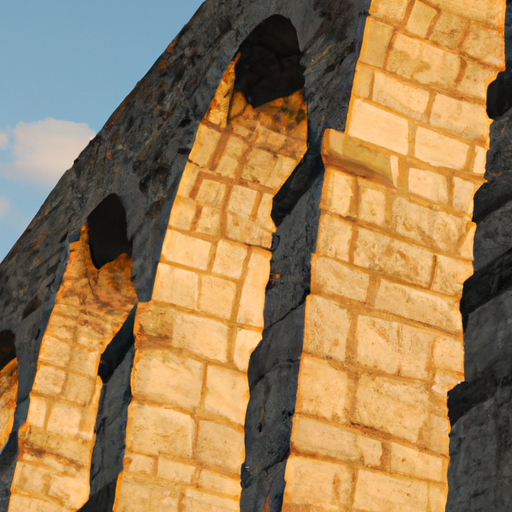
Italy is a country that captivates with its rich history, stunning landscapes, and mouthwatering cuisine. But did you know that it is also home to some of the most impressive engineering feats of the ancient world? Roman aqueducts, in particular, stand as living monuments to the ingenuity and skill of the Roman Empire. These magnificent structures, which once carried water across vast distances, are a testament to the innovative thinking of the ancient engineers. Join me as we explore the legacy of Roman aqueducts and uncover the secrets behind these engineering marvels.
Introduction to Roman Aqueducts
Roman aqueducts were remarkable feats of engineering that played a crucial role in supplying water to the cities of the Roman Empire. These magnificent structures, built over two millennia ago, still stand as a testament to the ingenuity and advanced engineering skills of the ancient Romans. Let’s delve into the history, purpose, design, and notable examples of Roman aqueducts, and explore their incredible legacy that continues to influence modern engineering.
Purpose and Function of Aqueducts
The primary purpose of Roman aqueducts was to provide a reliable and clean water supply to cities, especially the capital city of Rome. In ancient times, access to clean, fresh water was essential for the health, sanitation, and prosperity of a city. The aqueducts ensured a steady flow of water to fulfill various needs, from drinking and cooking to bathing and irrigation.
One of the critical functions of the aqueducts was to bring fresh water from distant sources to the urban centers. Some aqueducts spanned hundreds of kilometers to transport water from mountains, springs, or rivers to the cities. The aqueduct system effectively solved the problem of limited local water sources and enabled the growth and expansion of urban areas.
Design and Construction Techniques
Roman aqueducts were designed and constructed with meticulous attention to detail and innovative engineering techniques. The Romans employed sophisticated methods to create a channel for the water to flow continuously from its source to the destination.
The construction of aqueducts typically involved a series of arches, which allowed the water to flow at a gentle gradient and overcome natural obstacles like valleys or hills. These arches were made of durable materials like stone or concrete and were engineered to withstand the weight and pressure of the water passing through them.
The Romans also used a combination of underground tunnels, elevated channels, and open-air canals to transport the water. In some cases, underground tunnels were necessary to maintain a constant temperature and prevent the water from freezing during cold winters.
Maintaining and improving the aqueducts was a crucial aspect of their design. The Romans built inspection chambers and maintenance shafts along the length of the aqueducts to facilitate regular checks and repairs. They also developed techniques to control the flow of water, such as regulating valves and settling tanks, to ensure clean and reliable supply to the cities.
Notable Roman Aqueducts
Several Roman aqueducts gained fame for their impressive size, engineering, and historical significance. Here are some notable examples:
Aqueduct of Segovia
The Aqueduct of Segovia, located in present-day Spain, is a stunning example of Roman engineering. This aqueduct consists of two levels of arches made of granite blocks, and it spans over 16 kilometers. Despite being constructed around the 1st century AD, it served as a functioning aqueduct until the 19th century.
Aqua Appia
The Aqua Appia was Rome’s first-ever aqueduct, built in 312 BC. It spanned approximately 16 kilometers to bring water from the springs near present-day Rome. This aqueduct played a significant role in establishing a reliable water supply for the growing city and set the foundation for future aqueduct construction.
Aqua Claudia
The Aqua Claudia, built by Emperor Caligula and completed by Emperor Claudius, was one of the largest aqueducts in Rome. It stretched over 69 kilometers and provided water from mountain springs to the city. The aqueduct featured multiple tiers of arches and impressive engineering, including a tunnel carved through solid rock.
Pont du Gard
The Pont du Gard in France is an iconic Roman aqueduct that spans the Gardon River. This three-tiered bridge aqueduct stands at an impressive height of 48 meters and stretches over 275 meters. Built around the 1st century AD, it showcased the Romans’ mastery of stone masonry and hydraulic engineering.
Aqua Alexandrina
The Aqua Alexandrina, constructed during the reign of Emperor Alexander Severus, supplied water to the city of Alexandria, Egypt. This aqueduct spanned approximately 120 kilometers and featured a combination of underground tunnels and elevated channels to transport water over varied terrains.
Innovative Engineering of Roman Aqueducts
Roman aqueducts were a testament to the Romans’ innovative engineering skills and their meticulous approach to construction. Precise calculation and measurement were crucial in ensuring that the aqueducts maintained a consistent gradient and flow of water.
One of the notable engineering achievements of Roman aqueducts was their impressive bridge designs. By incorporating arches and pillars, the aqueducts could span wide valleys and rivers, providing a continuous flow of water without interruption.
The Romans also developed sophisticated water distribution systems within the cities. Once the water reached the urban areas, it was distributed through a network of smaller pipes and channels, delivering water to public baths, fountains, and residences.
Hydraulic engineering played a crucial role in the design of aqueducts. The Romans understood the importance of maintaining a steady flow and pressure in the system, which required careful management of elevation changes and the use of settling tanks and valves to control the water flow.
Infrastructure and Urban Planning
Roman aqueducts were not just engineering marvels; they also played a significant role in the urban development and infrastructure planning of ancient Rome. The availability of a reliable water supply allowed the Romans to build grand public baths, elaborate fountains, and lush gardens, enhancing the quality of life for its citizens.
The aqueducts influenced the architecture and layout of the cities they served. The presence of the elevated channels and arches became integral parts of the cityscape, creating visually stunning structures that showcased the Romans’ architectural prowess. The aqueducts also shaped the development of neighborhoods and urban settlements, as they determined where water was accessible and influenced the distribution of residential areas.
The integration of aqueducts with other structures, such as bridges and roads, facilitated efficient transportation and communication within the city. The Romans recognized the need for well-connected infrastructure to support the functioning of the aqueducts and ensure the smooth flow of goods and people.
Widespread Influence and Legacy
The innovative engineering and technological advancements of Roman aqueducts had a far-reaching influence beyond the borders of the Roman Empire. As the empire expanded and encountered different regions with varying water supply challenges, the Romans adapted and modified their aqueduct designs to suit local conditions.
Aqueduct technology and engineering knowledge spread to Roman provinces, such as Spain, France, and North Africa, where impressive aqueducts were constructed. The Roman aqueducts served as prototypes and inspirations for future civilizations, influencing the development of water management and supply systems throughout history.
Even today, the legacy of Roman aqueducts is visible in modern engineering practices. The Romans’ emphasis on precise measurement, durable materials, and effective water management remains fundamental in the design and construction of water supply systems worldwide.
Comparison to Modern Engineering
While modern engineering has undoubtedly advanced with new technologies and materials, the Roman aqueducts still serve as a source of inspiration and admiration. Lessons learned from the construction and maintenance of Roman aqueducts continue to shape modern engineering practices in various ways.
The Romans’ approach to water supply systems emphasized long-term sustainability and environmental considerations. They recognized the need to protect water sources and maintain the integrity of the aqueducts to ensure a constant, clean supply of water. This focus on sustainability aligns with modern engineering practices that emphasize environmental impact and resource management.
Advancements in modern water supply systems, such as pipelines, pumping stations, and purification techniques, have built upon the foundations laid by Roman aqueducts. The understanding of hydraulics, the use of different materials, and the integration of advanced technologies have allowed for more efficient and sophisticated water supply solutions.
While the scale and complexity of modern engineering projects may surpass the Roman aqueducts in some ways, one cannot help but appreciate the remarkable engineering mastery of ancient Rome. The aqueducts stand as enduring symbols of human ingenuity and serve as a constant reminder of the impressive feats that can be accomplished through intelligent design and careful engineering.
In conclusion, Roman aqueducts are an awe-inspiring testament to the engineering prowess of ancient Rome. These remarkable structures provided clean water, supported urban development, and left a lasting legacy that continues to influence modern engineering practices. As we marvel at the grandeur and splendor of these ancient marvels, let us remember the incredible engineering achievements of the Roman Empire and the lessons they continue to teach us.
 English