
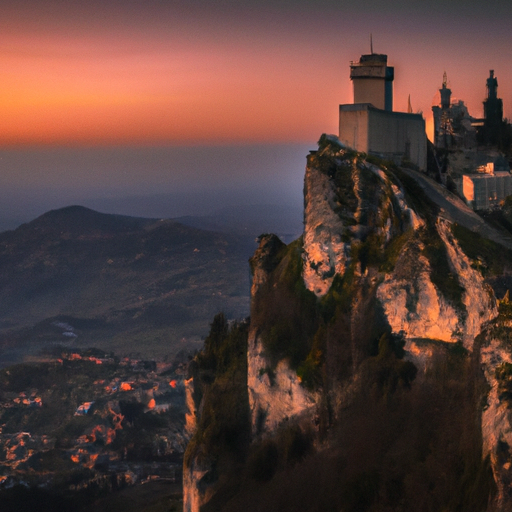
Nestled within the enchanting landscapes of Italy is a tiny gem known as San Marino. This microstate may be one of the smallest countries in the world, but it boasts a rich history and captivating scenery that will leave a lasting impression. Perched on a rugged mountaintop, San Marino offers panoramic views of the surrounding countryside, with its medieval castles and quaint cobblestone streets transporting visitors back in time. From its stunning architecture to its vibrant culture, exploring San Marino promises to be an unforgettable experience that will make you feel like you’ve stepped into a fairytale.
Location
Geographical Location
Located in southern Europe, San Marino is a small landlocked country surrounded by Italy. Nestled on the eastern side of the Italian Peninsula, it is situated on the northeastern part of the Apennine Mountains. Despite its small size, San Marino is rich in history, culture, and natural beauty.
Surrounded by Italy
Bordered entirely by Italy, San Marino is enclosed within the Emilia-Romagna and Marche regions. It shares its borders with the Italian municipalities of Rimini and Verucchio. This unique geographical location allows for easy access to and influence from its larger neighbor while maintaining its own distinct identity.
History
Founding
San Marino has a fascinating history that dates back to its founding in the early 4th century. Legend has it that a Christian stonemason named Marinus sought refuge on Mount Titano to escape religious persecution. With his followers, Marinus established a small community that eventually evolved into the modern-day Republic of San Marino.
Independence
One of the remarkable aspects of San Marino’s history is its long-standing independence. For over 1,700 years, this tiny nation has maintained its autonomy, making it one of the oldest sovereign states in the world. San Marino’s commitment to preserving its independence is a testament to the resilience and strength of its people.
Relationship with Italy
San Marino’s relationship with Italy has been a crucial element of its history and development. While maintaining its independence, San Marino has maintained a strong bond with Italy, culturally, economically, and politically. Over the years, San Marino has benefited from its ties with Italy, while also preserving its unique identity and traditions.
Government
Constitutional Republic
San Marino is a constitutional republic, meaning that it operates under a system of government where power is divided between the head of state and a representative assembly. The country’s constitution, adopted in 1600, outlines the structure and functions of its government.
Electoral System
The electoral system in San Marino is based on proportional representation. Citizens over the age of 18 have the right to vote in regular elections, which are held every five years. This system allows for fair representation of different political parties and ensures that the voices of the people are heard in the decision-making process.
Political Parties
San Marino has a multi-party system, with several political parties competing for seats in the Grand and General Council, the country’s legislative body. The major political parties in San Marino include the Christian Democratic Party, the Socialist Party, and the Popular Alliance.
Economy
Currency
San Marino is not part of the European Union and does not use the Euro as its currency. Instead, the country has its own currency called the Sammarinese lira, which is pegged to the Euro. However, due to an agreement with Italy, the Euro is widely accepted and used in San Marino for daily transactions.
Main Industries
San Marino has a diverse economy despite its small size. The country’s main industries include tourism, banking, manufacturing, and agriculture. Tourism plays a significant role in San Marino’s economy, with visitors drawn to its historical sites, picturesque landscapes, and relaxed atmosphere. The manufacturing sector focuses on the production of ceramics, textiles, and watches, among other products.
Tourism
San Marino’s unique historical sites and picturesque landscapes make it a popular tourist destination. The historic center of San Marino, a UNESCO World Heritage site, is a must-visit. Its medieval streets, ancient towers, and stunning views of the surrounding countryside attract visitors from around the world. The Three Towers of San Marino, including the iconic Guaita Tower, offer a glimpse into the country’s rich history. Additionally, Monte Titano, the highest peak in San Marino, provides nature enthusiasts with hiking trails and breathtaking vistas.
Culture
Language
The official language of San Marino is Italian. Due to its proximity and close ties with Italy, Italian is spoken by the majority of the population. However, many residents of San Marino also speak the local dialect known as Sammarinese, which has similarities to the Romagnol dialect spoken in the neighboring Italian region of Emilia-Romagna.
Religion
Religion plays an important role in the culture of San Marino. The majority of the population identifies as Roman Catholic, and the country has close ties to the Vatican City. The influence of Catholicism can be seen in the various religious festivals and traditions celebrated throughout the year.
Traditions and Festivals
San Marino has a rich tradition of festivals and celebrations that reflect its cultural heritage. One of the most significant events is the Feast of San Marino, held on September 3rd each year, to honor the country’s patron saint. This festival includes parades, concerts, fireworks, and various cultural activities. Other traditional festivals, such as the Feast of Our Lady of Consolation and the Crossbow Tournament, also showcase the vibrant culture and history of San Marino.
Landmarks
Historic Center of San Marino
The historic center of San Marino, a UNESCO World Heritage site, is a treasure trove of architectural and historical wonders. Perched on the slopes of Mount Titano, this picturesque old town features narrow cobblestone streets, medieval buildings, and breathtaking views of the surrounding countryside. Visitors can explore the Palazzo Pubblico, the seat of the government, and the Basilica of San Marino, a magnificent church dating back to the 19th century.
Three Towers of San Marino
The Three Towers of San Marino are iconic symbols of the country’s rich history and heritage. These ancient fortifications, including the Guaita Tower, the Cesta Tower, and the Montale Tower, were built in the 11th century to defend the city-state. Today, they offer panoramic views of the landscape below and provide a glimpse into San Marino’s medieval past.
Monte Titano
Rising majestically above the historic center of San Marino, Monte Titano is a natural landmark that captures the essence of the country. It offers beautiful hiking trails, stunning vistas, and an opportunity to connect with nature. At the summit, visitors can marvel at the breathtaking panoramic views, explore the small chapels, and enjoy the tranquility and serenity of this natural wonder.
Transportation
Roads and Highways
San Marino has a well-developed road network that connects the various towns and villages within the country. The main road, known as the “Via Consolare,” runs through the historic center of San Marino and provides access to key destinations. Visitors driving in San Marino should be prepared for narrow, winding roads and hilly terrain.
Public Transportation
San Marino’s public transportation system primarily consists of buses that operate within the country and connect to neighboring Italian cities. Buses provide a convenient and affordable way to travel around San Marino and explore its different attractions. Additionally, there are cable cars that transport visitors from the base of Mount Titano to the historic center.
Access to San Marino
There are multiple ways to access San Marino. The closest international airport is the Federico Fellini International Airport in Rimini, Italy, which is approximately 20 kilometers away from San Marino. From there, visitors can take a taxi or use public transportation to reach the country. Alternatively, visitors can travel by train to Rimini and then take a bus or taxi to San Marino.
Education
School System
San Marino has a well-established and comprehensive education system. Education is compulsory for children between the ages of 6 and 16. The school system is divided into primary schools, middle schools, and secondary schools. The curriculum includes a wide range of subjects, including languages, mathematics, sciences, and humanities.
Higher Education
San Marino does not have its own university, but it has agreements with several Italian universities. Students have the opportunity to pursue higher education in various fields by attending universities in nearby Italian cities, such as Rimini and Urbino. These partnerships provide San Marino residents with access to quality education while allowing them to remain close to home.
Educational Institutions
San Marino is home to several educational institutions that cater to different levels of education. These include primary schools, middle schools, and secondary schools. The University of the Republic of San Marino, although not located within the country, offers distance learning programs for students who wish to pursue higher education.
Healthcare
Healthcare System
San Marino has a well-developed healthcare system that provides accessible and quality healthcare services to its residents. The healthcare system is primarily funded through social security contributions, ensuring that healthcare services are available to all citizens. The country is also closely linked to the Italian healthcare system, allowing residents to access specialized medical care when needed.
Hospitals and Clinics
San Marino has several hospitals and clinics that provide a wide range of medical services. The largest hospital is the State Hospital, which offers specialized departments and emergency care. In addition to the State Hospital, there are also private clinics and medical centers that cater to specific medical needs.
Health Statistics
San Marino boasts an excellent healthcare system, resulting in favorable health statistics for its population. The country has a high life expectancy and a low infant mortality rate. The healthcare system’s focus on prevention, early detection, and access to medical care contributes to the overall well-being of the population.
Sports
Popular Sports
Sports play an important role in the culture of San Marino, with several popular sports enjoyed by the population. One of the most popular sports is football (soccer), with many local clubs and teams actively participating in national and regional competitions. Other popular sports include athletics, basketball, volleyball, and motorsports.
Football in San Marino
Football holds a special place in the hearts of San Marino residents. While the national football team may not have achieved significant success on the international stage, football enthusiasts in San Marino are passionate about the sport. Local teams and clubs provide opportunities for aspiring players to develop their skills and compete at various levels.
Sports Facilities
San Marino boasts excellent sports facilities to support various athletic endeavors. The Olympic Stadium, located in Serravalle, is the largest sports facility in San Marino and hosts numerous sporting events, including football matches and athletics competitions. Additionally, the country has several sports complexes, gyms, and outdoor arenas that cater to different sports and recreational activities.
In conclusion, San Marino may be one of the world’s smallest countries, but it is undoubtedly rich in history, culture, and natural beauty. Nestled within Italy, this tiny republic has managed to preserve its independence and unique identity while maintaining close ties with its larger neighbor. From its picturesque historic center and ancient towers to its vibrant festivals and stunning landscapes, San Marino is a hidden gem waiting to be discovered. Whether you’re a history enthusiast, a nature lover, or a curious traveler, a visit to San Marino promises an unforgettable experience in the heart of Europe.
 English